Case Study: Wastewater Treatment in the Aviation Industry – Efficient Treatment of Crack Testing Water Using Evaporation Technology
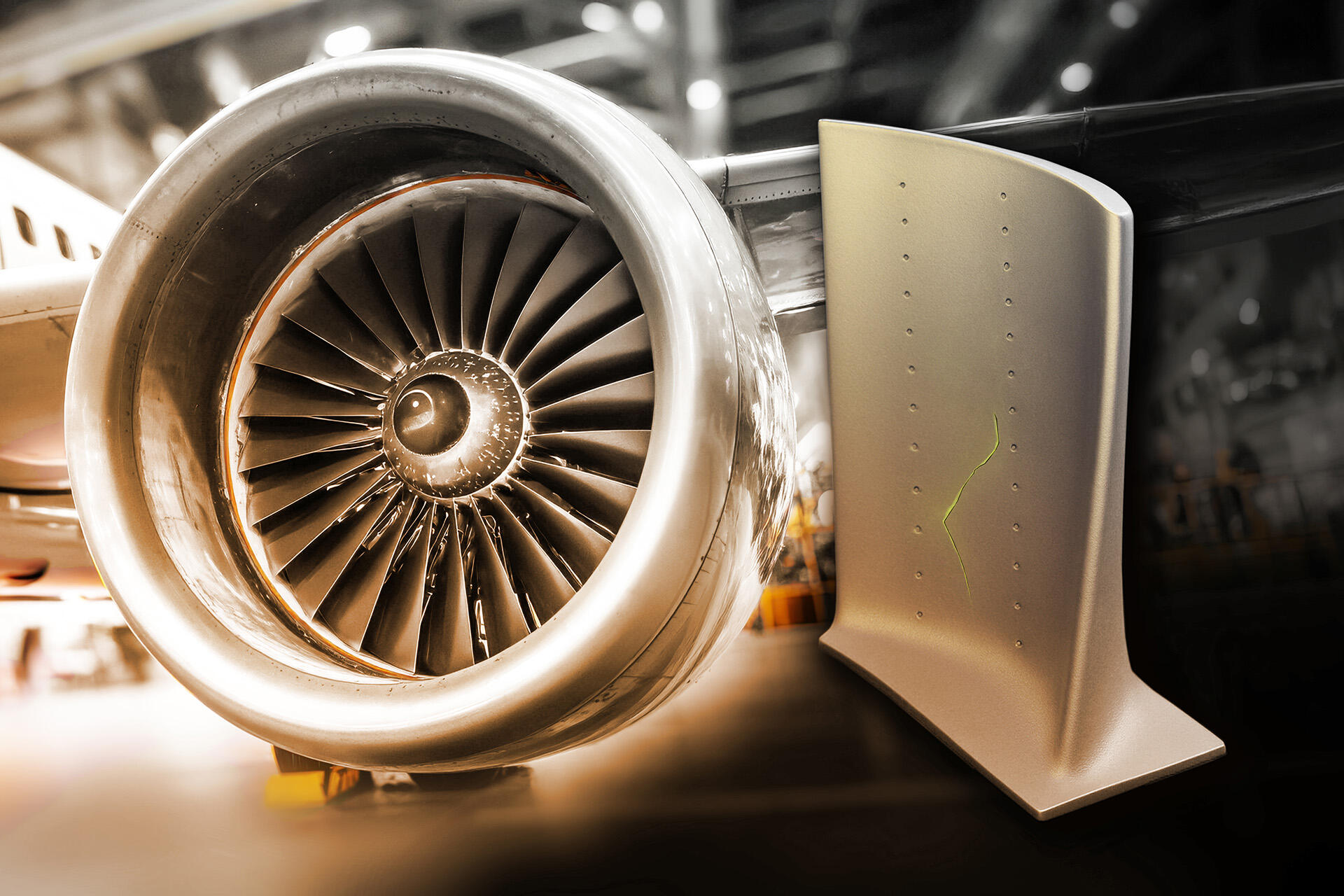
The aviation industry generates highly specialised wastewater that is often difficult to treat using conventional methods. Crack testing water (NDT) in particular poses major challenges for companies, as it contains chemical contaminants and must simultaneously meet stringent requirements regarding disposal and environmental compatibility. A European supplier of aerospace components found itself in precisely this situation – with the aim of making wastewater treatment more cost-effective whilst simultaneously improving its environmental footprint.
Initial situation
As production volumes rose, the volume of wastewater also increased significantly. In addition to cooling lubricants, it was planned to treat rinse water from parts cleaning and the particularly costly crack testing water in future. The existing evaporation plant was not sufficiently sized for this and could not reliably process the additional volumes.
In total, around 1,500 m³ of wastewater was generated annually, which until then had to be disposed of at great expense.
Economic pressure was mounting – as were the demands for a sustainable and future-proof solution.
Technical challenge
The particular difficulty lay in the combination of different wastewater streams. Whilst cooling lubricants and rinse water were already known, the crack testing water presented an additional challenge. It is chemically complex, often cannot be discharged directly and incurs above-average disposal costs.
At the same time, the new solution had to meet several requirements: higher throughput, stable processes despite fluctuating composition, and integration into existing workflows – without additional staffing costs.
Technical Solution
The existing system was replaced with an ET 200 atmospheric evaporator and supplemented with a tailored pre-treatment process. The aim was to treat all wastewater streams within a stable and continuous process.
The wastewater first undergoes mechanical pre-treatment. A belt filter with an integrated oil separator removes coarse solids and free oils. This is followed by fine filtration before the medium is fed into the evaporator.
In the evaporator, the wastewater is thermally separated: the water evaporates and is recovered as distillate, whilst the pollutants it contains are concentrated in the concentrate. The distillate is additionally treated via an oil separator to ensure consistently high quality.
A decisive factor in the project’s success was the plant’s specific design tailored to the particular medium. Through preliminary laboratory tests – with a particular focus on the crack testing water – the process parameters could be optimally adjusted and stable operation ensured.
Results
The new system enabled the customer to make their wastewater treatment significantly more efficient. Disposal costs were noticeably reduced, as the volume of wastewater was considerably reduced through evaporation. At the same time, several wastewater streams could be combined into a single system, which significantly reduced operational complexity.
The environmental footprint has also improved sustainably, as less waste is generated and some of the water can be recycled. The reduced maintenance requirements and the robust plant technology have also led to lower operating costs and higher plant availability.
Conclusion
- Efficient treatment of complex wastewater streams such as crack testing water
- Significant reduction in disposal and operating costs
- Consolidation of multiple wastewater streams into a single system
- High process reliability through targeted design and preliminary testing
- Sustainable and scalable solution for increasing requirements
This project demonstrates that even complex industrial wastewater, such as crack testing water, can be treated cost-effectively. Particularly in the aviation industry, where high quality and environmental standards apply, evaporator technology offers a reliable solution for rising wastewater volumes and cost structures.
Companies with comparable processes benefit particularly when different media need to be combined and conventional methods reach their limits.
What type of wastewater do you have?